Sezzle Express Checkout Integration
Role
Associate Product Designer
Duration
6 months
Tools
Figma
Industry
Fintech
Category
Web & Mobile Web
Project Status
Shipped (100%)
High-Level Impact
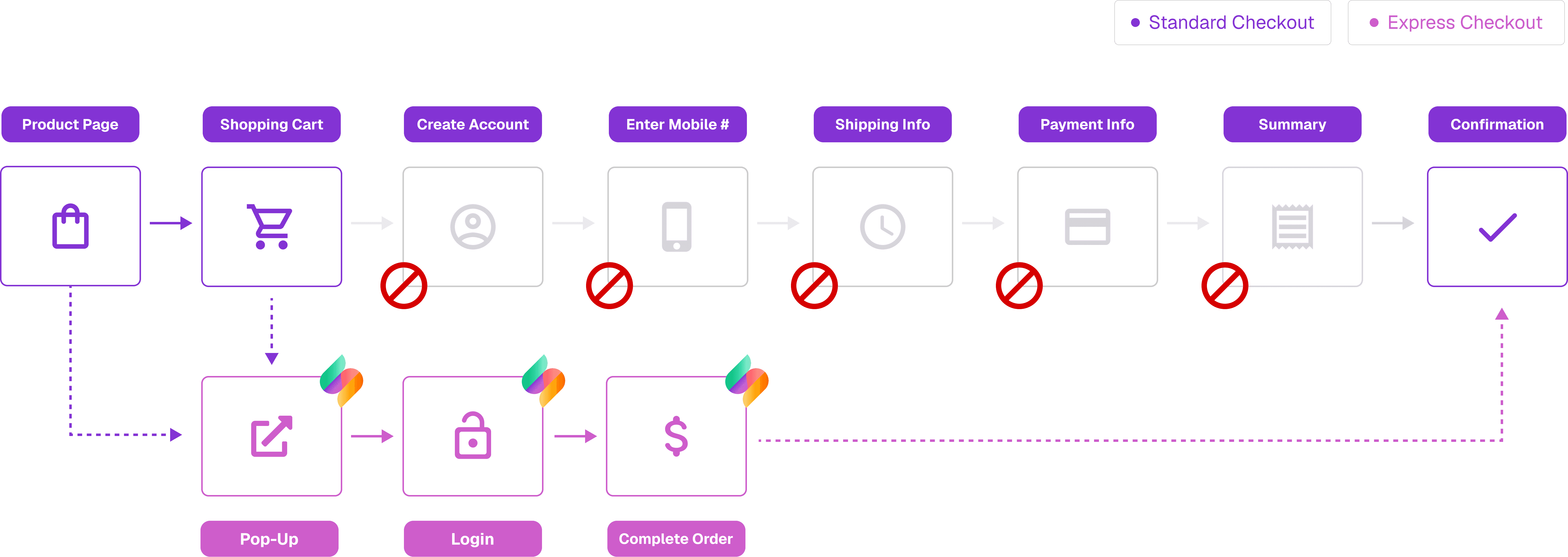
Reduced checkout flow from six steps to three, minimized manual form entry for returning users, and reduced shopping cart abandonment.
Business Context
Checkout is the highest-leverage moment in ecommerce. With over 70% of online carts abandoned industry-wide, reducing friction during checkout presents a significant opportunity to improve conversion and merchant revenue. Sezzle identified checkout simplification as a strategic growth initiative.
Problem
Returning users already had saved information during checkout, but shoppers often still need to re-enter details such as personal info, shipping information, payment methods, etc. Entering long form filling processes during checkout creates unnecessary friction for users and increased customer drop-off risk for merchants.
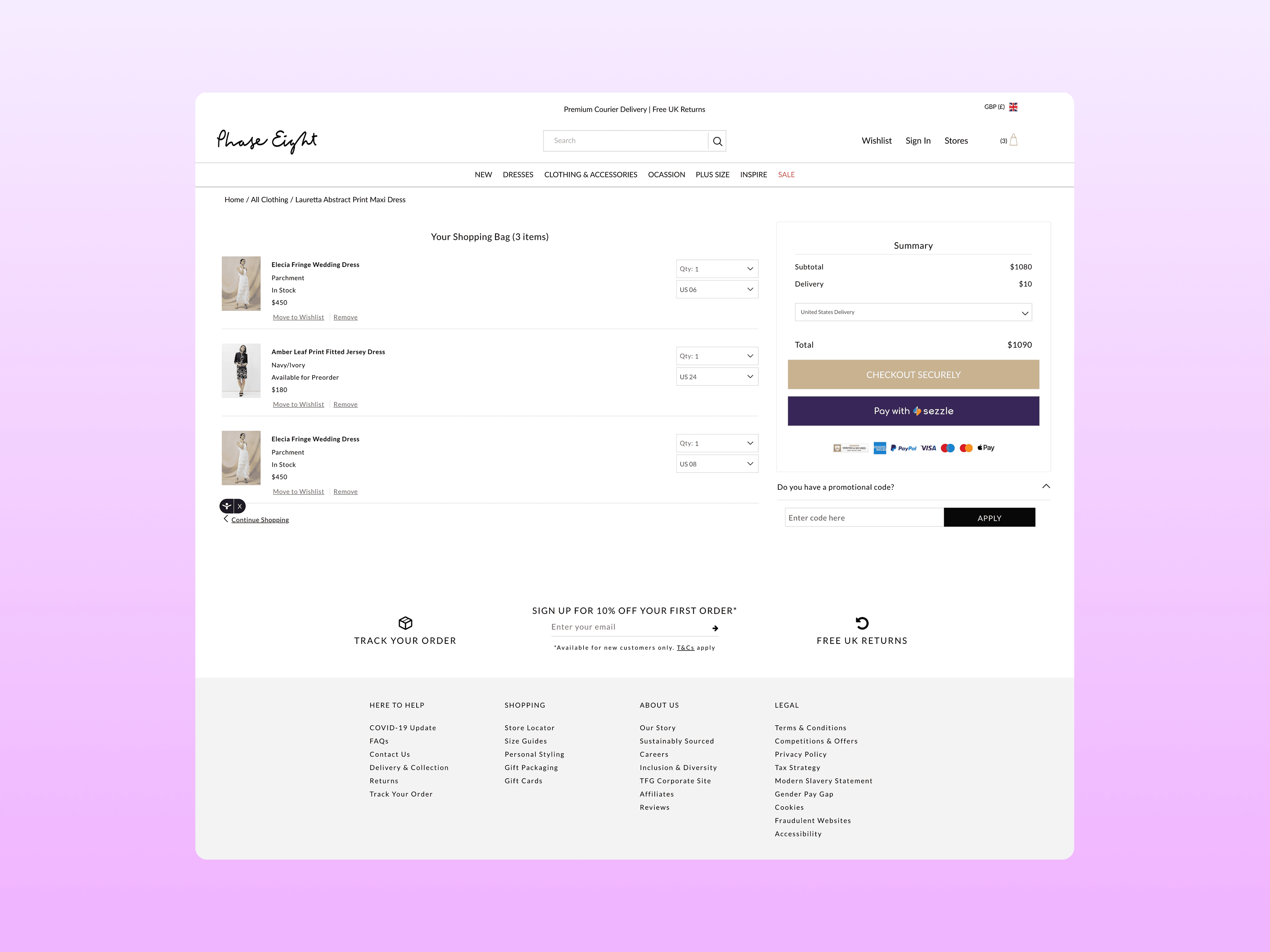
Traditional Checkout Experience
How might we reduce checkout friction for returning shoppers while preserving clarity and trust? Which steps add real value vs unnecessary friction?
Design Process
I led the design process by mapping the existing checkout funnel, identifying friction points, and iterating on flow concepts that balanced speed, clarity, and technical feasibility.
1. Journey Mapping
Mapped the existing checkout funnel to identify friction points, especially on mobile web.
2. Friction Analysis
Reviewed steps causing repeated input, extra decisions, and momentum loss.
3. Flow Exploration
Explored multiple checkout concepts balancing speed and payment transparency.
4. Decision Validation
Partnered with product and engineering to validate feasibility and compliance requirements.
5. Iteration & Refinement
Adjusted hierarchy and confirmation patterns to maintain trust while reducing steps.

Discovery & Insights
Which steps add real value vs unnecessary friction? Where does user momentum break during checkout? I focused on these core questions by analyzing the standard checkout journey.
Insight 1: Manual input was the biggest friction
Users had already provided information previously, so re-entering information again created unnecessary work.
Insight 2: Returning users want speed, not more detail
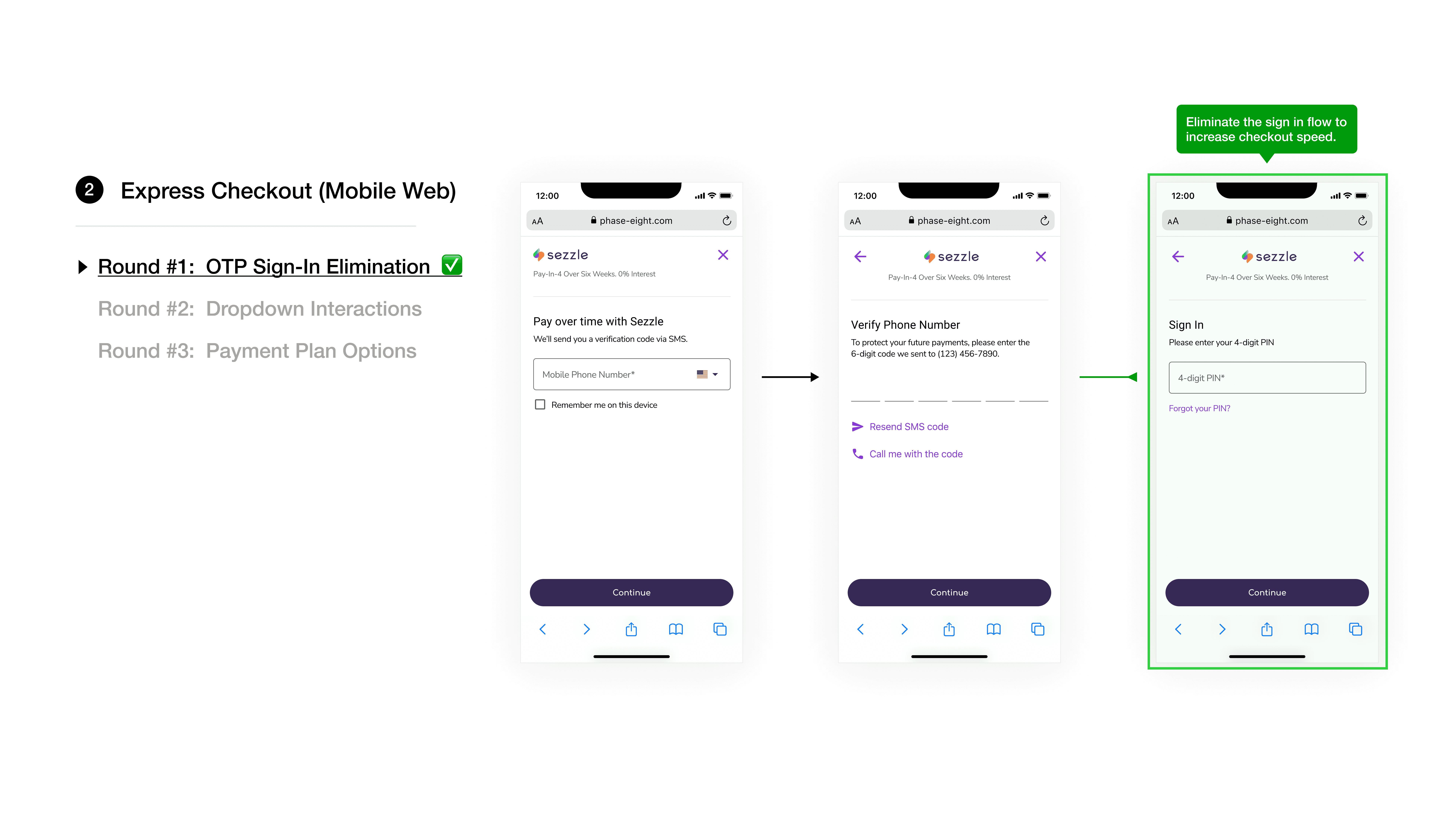
Users with existing Sezzle profiles wanted checkout to feel instant. Users didn’t need long explanations.
Insight 3: Too many micro-decisions hurt momentum
Each step interrupted purchase intent. Users still need to understand payment plans clearly before confirming purchase. This shifts the design focus from “adding new UI” to removing unnecessary decisions.
Secondary Research
How fast can checkout be without confusing users? Should checkout happen immediately or include confirmation? Should users edit information every time? This project required balancing speed, clarity, and user control in a financial transaction.
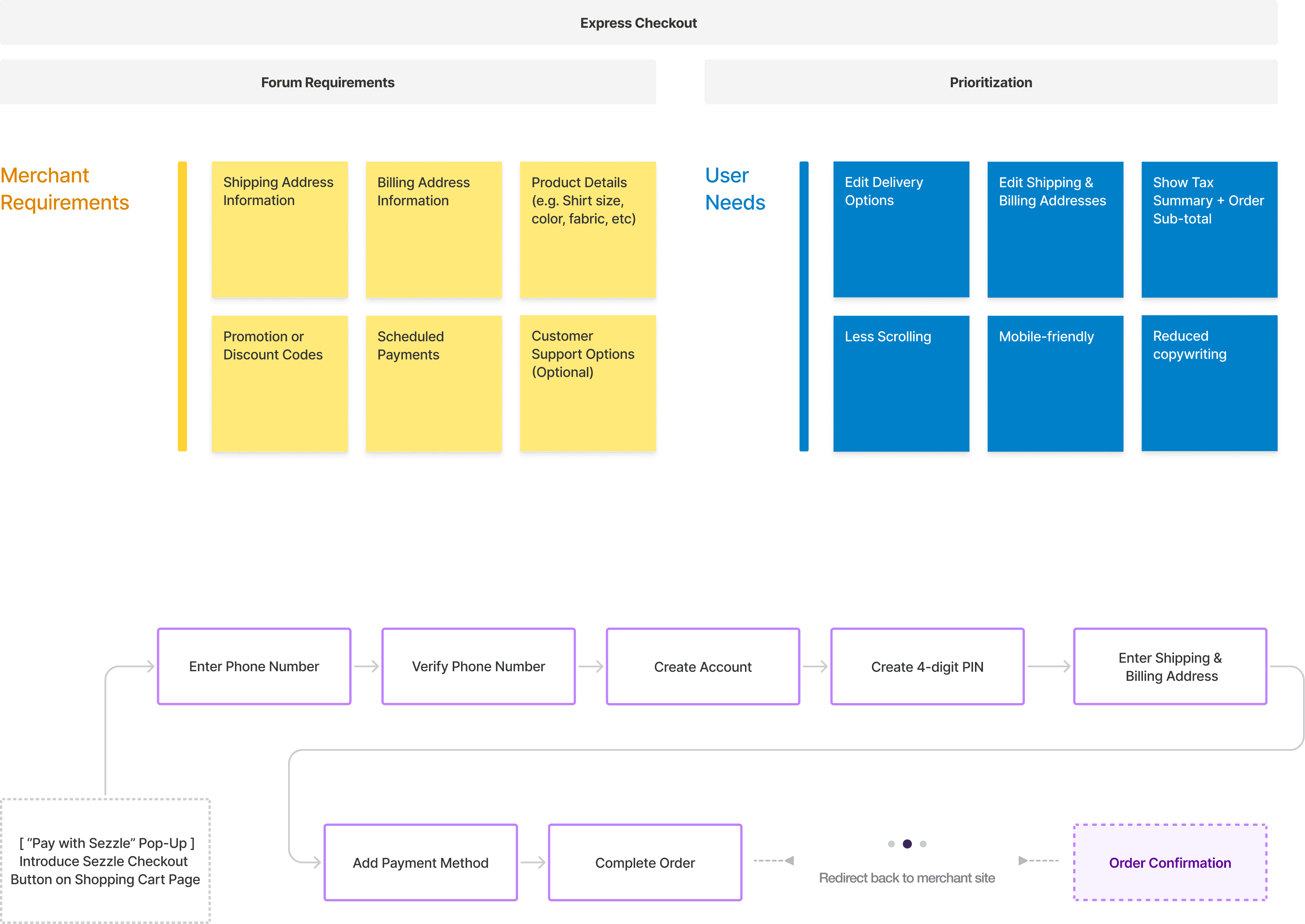
Guiding Design Principles
Reuse existing user data
Maintain payment clarity and trust
Minimize decisions during checkout
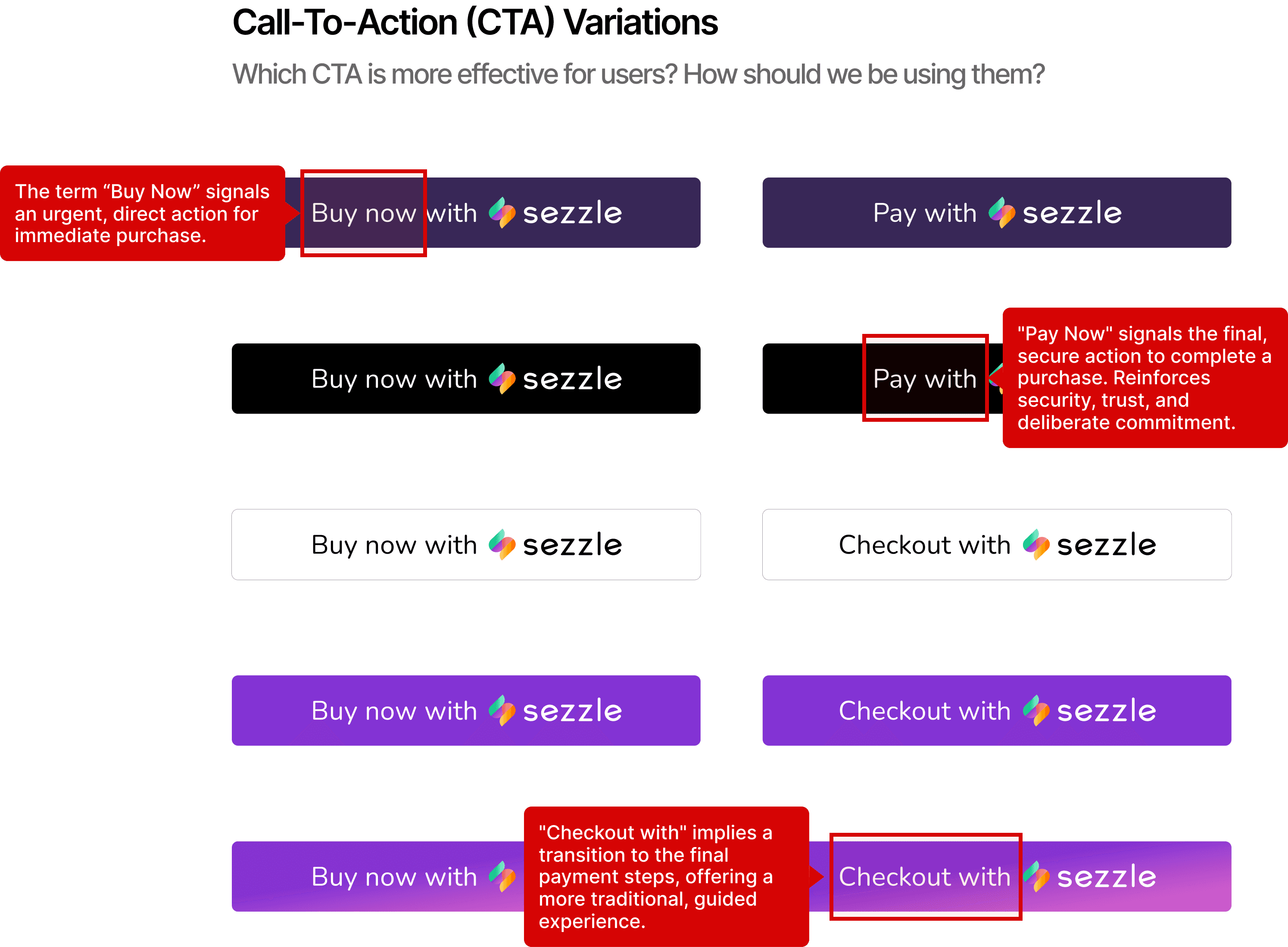
Early CTA Button Concepts
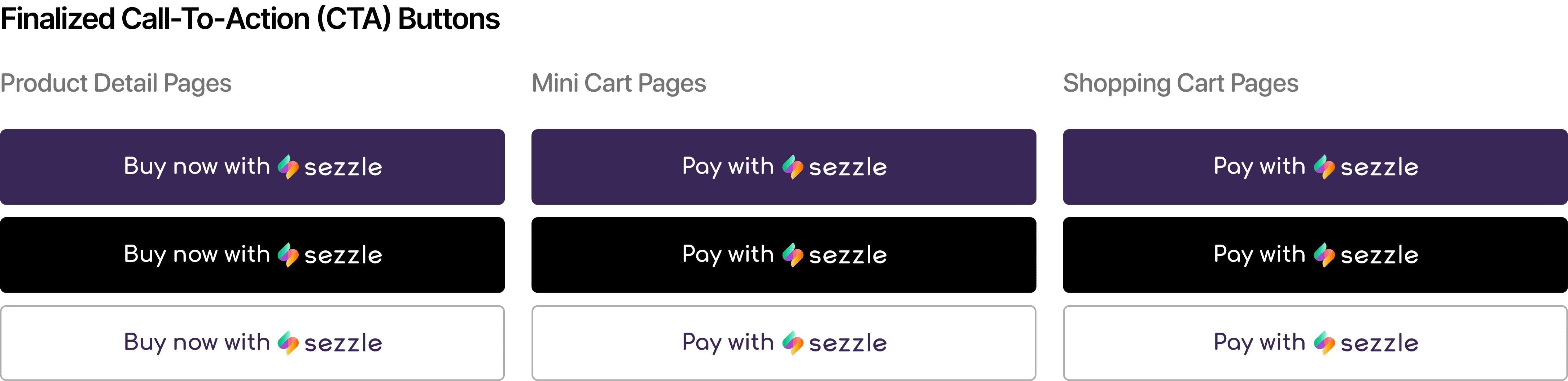
The checkout CTA is a high-impact decision surface that heavily influences user confidence and completion rates. I explored multiple CTA options to improve clarity and increase user confidence during payment selection.
Usability Testing

Iteration A: Non-Sticky CTA

Iteration B: Sticky CTA
Design Explorations
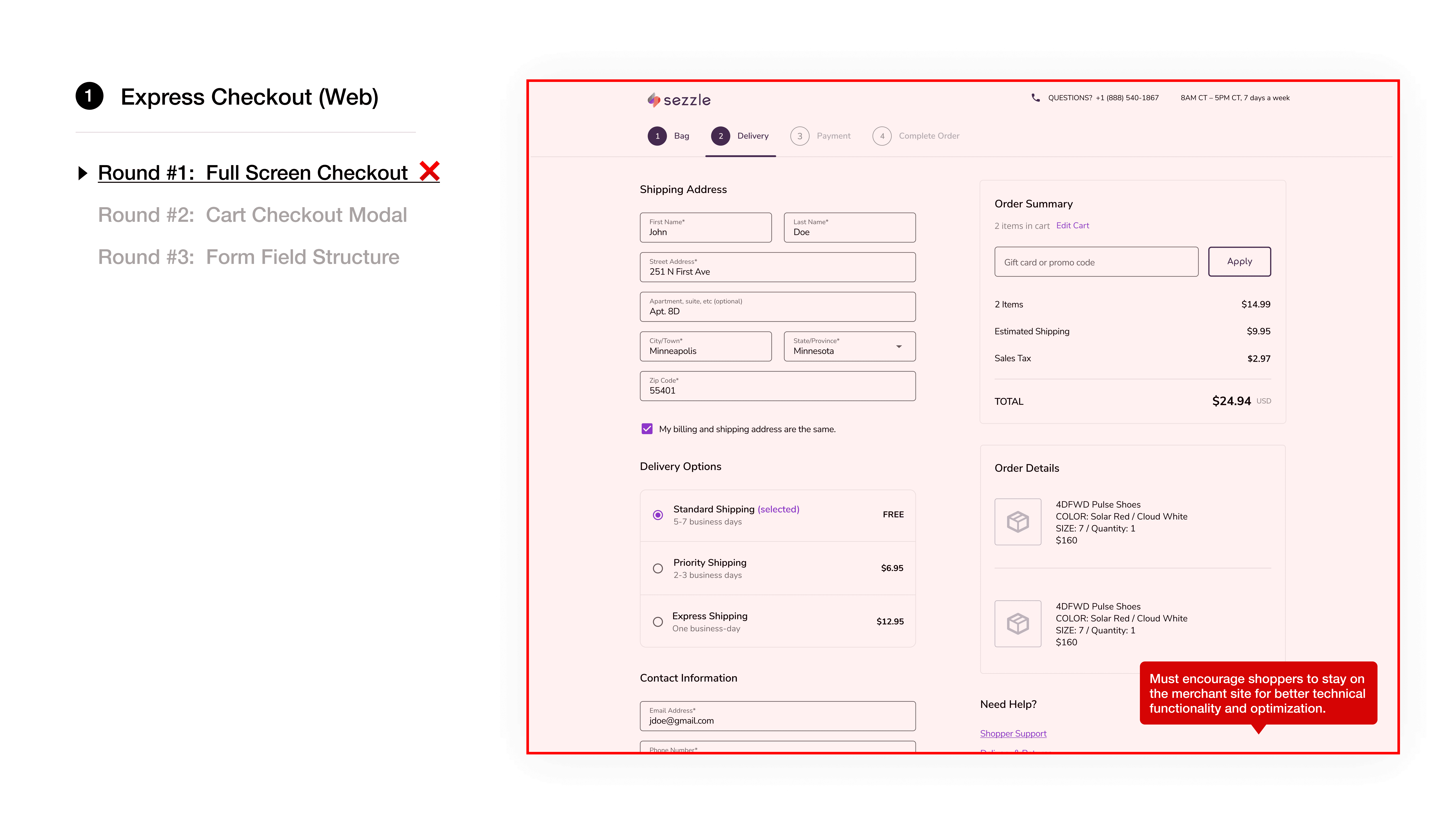
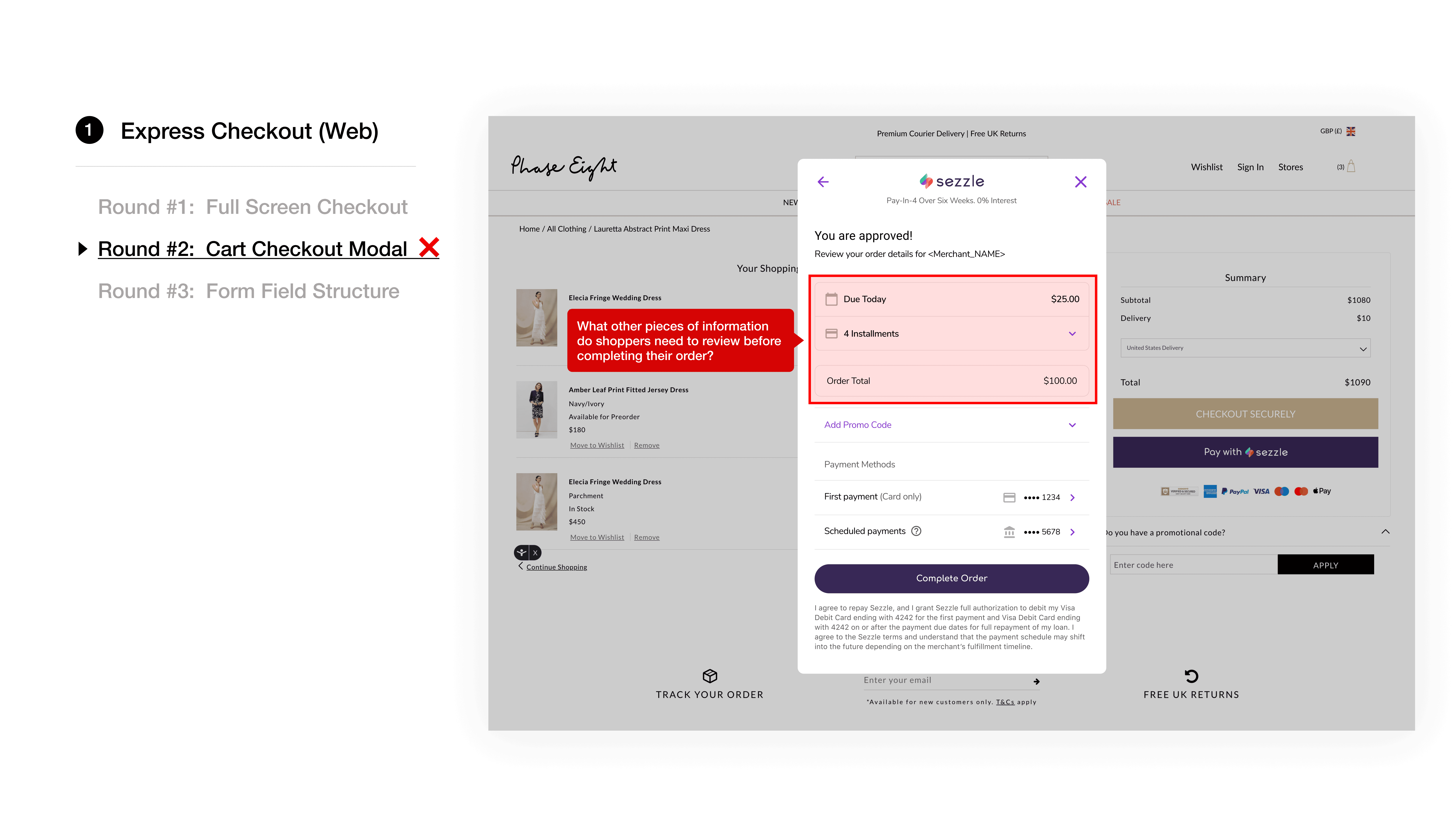
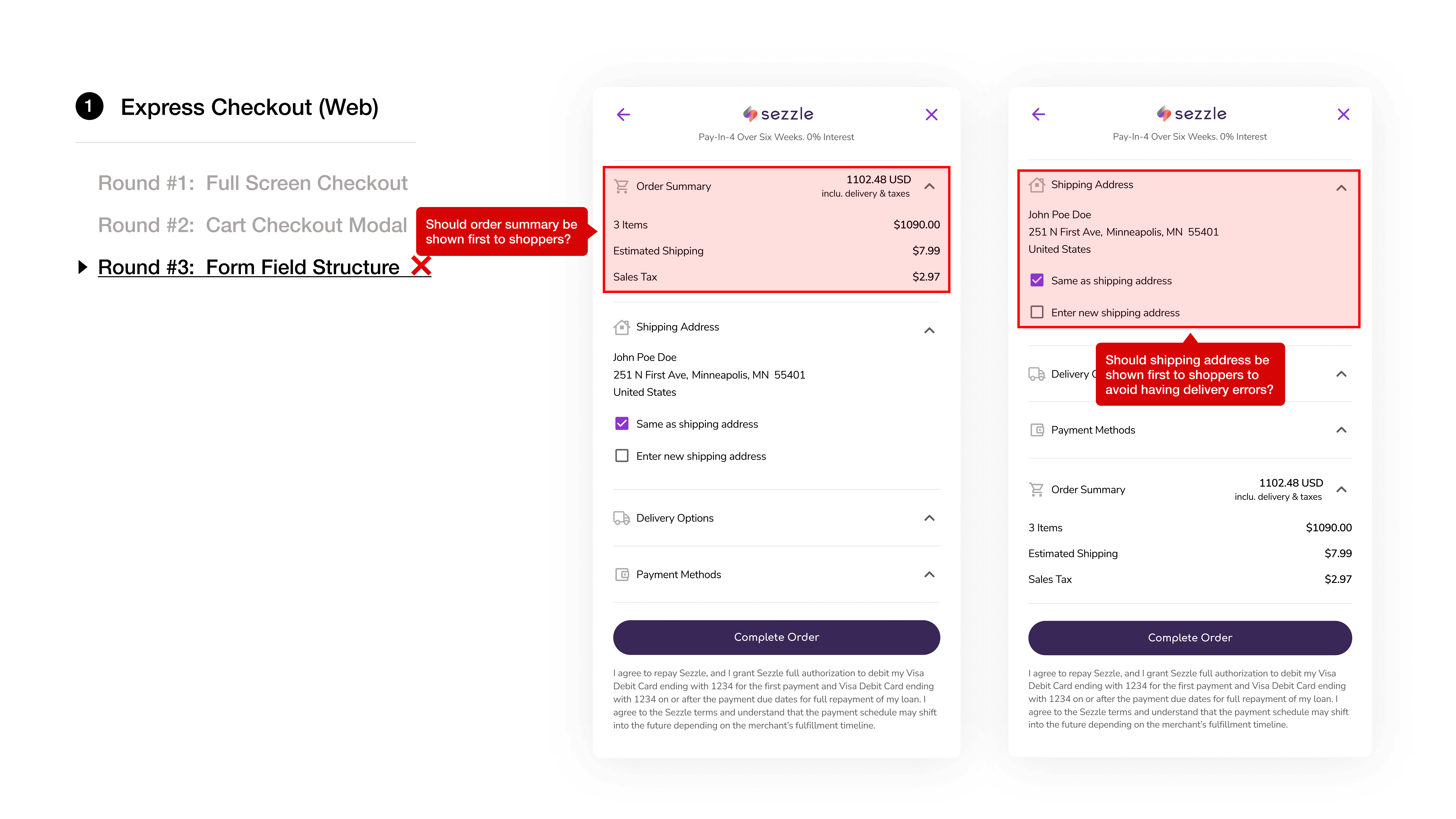
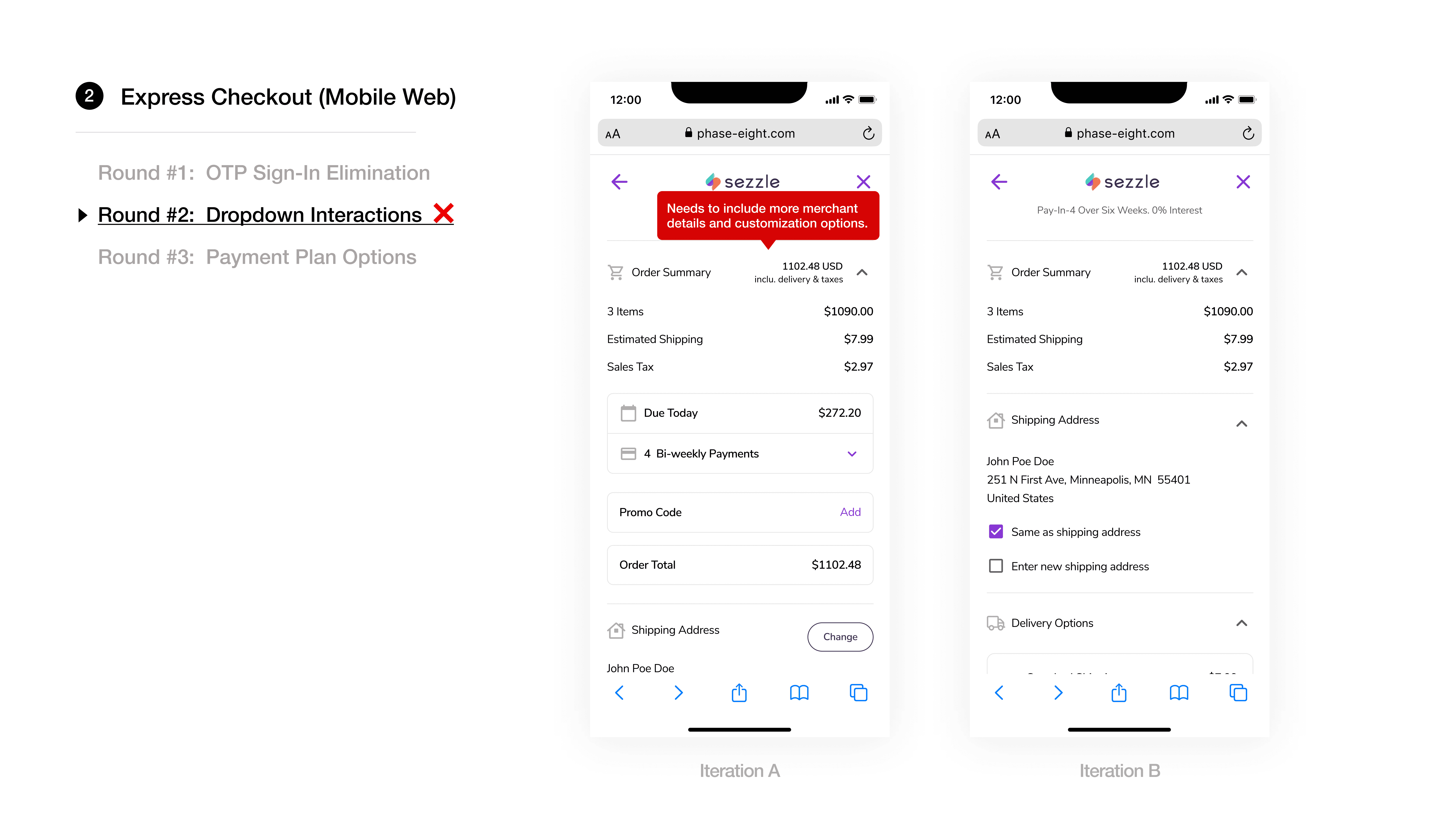
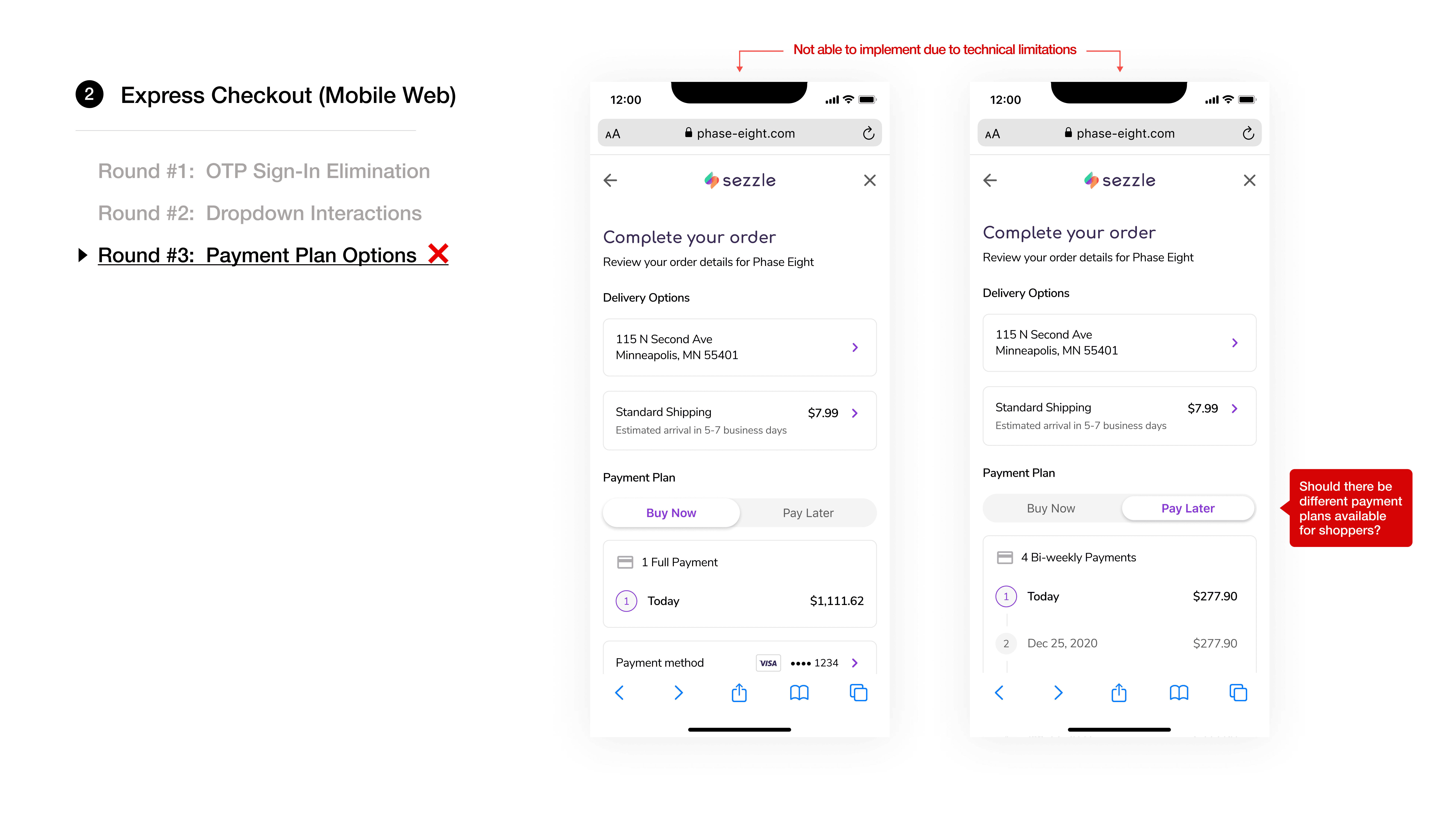
I explored multiple structural approaches including a full-page redirect flow, embedded checkout layer, and a pop-up modal overlay. The modal approach was selected because it reduced friction while maintaining merchant integration stability. It also allows users to remain on the merchant website without being redirected to a new web page.
Final Solution
The final solution introduced Sezzle Express Checkout, a streamlined modal experience allowing returning shoppers to complete purchases with significantly fewer steps while remaining on the merchant’s website. Instead of redirecting users through multiple pages and repetitive form fields, Express Checkout:
Prefilled saved shopper information from Sezzle accounts
Consolidated review and confirmation into a single, clear step
Kept payment details visible to preserve trust and transparency
Reduced screen transitions and typing on mobile web
View Desktop
View Mobile Web
Product Impact
Express Checkout established Sezzle’s first fast-path checkout experience and directly supported efforts to reduce cart abandonment and improve conversion efficiency.
Reduced checkout flow from ~6 steps to ~3
Minimized manual form entry for returning users
Lowered interaction cost on mobile web
Standardized “Pay with Sezzle” CTA across checkout entry points
Successfully launched Express Checkout across 45K+ merchant platforms
Conclusion
In checkout design, reducing decisions creates more impact than adding features. Mobile friction is often driven by typing and screen transitions. Speed and trust must be balanced carefully in fintech experiences.